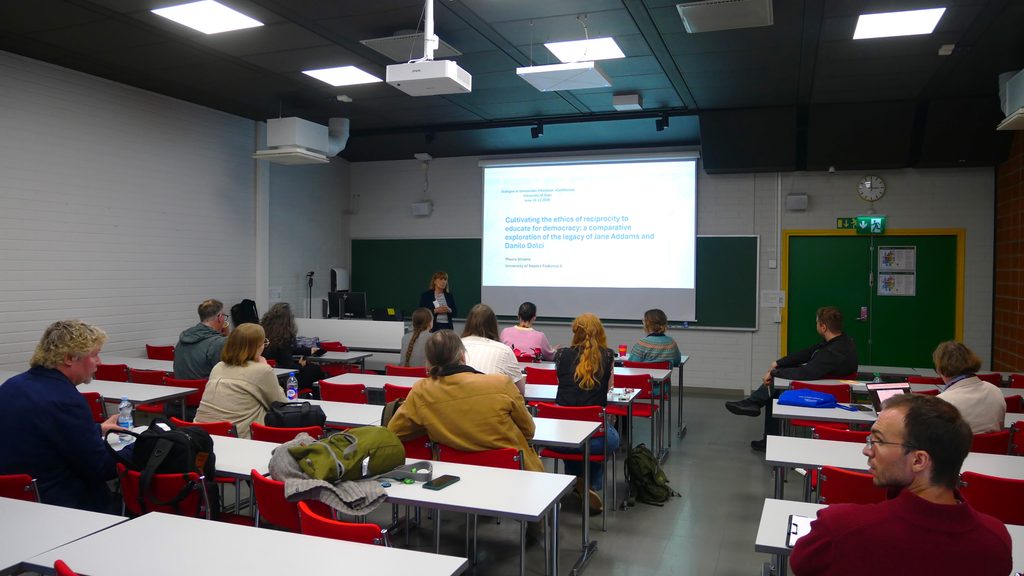
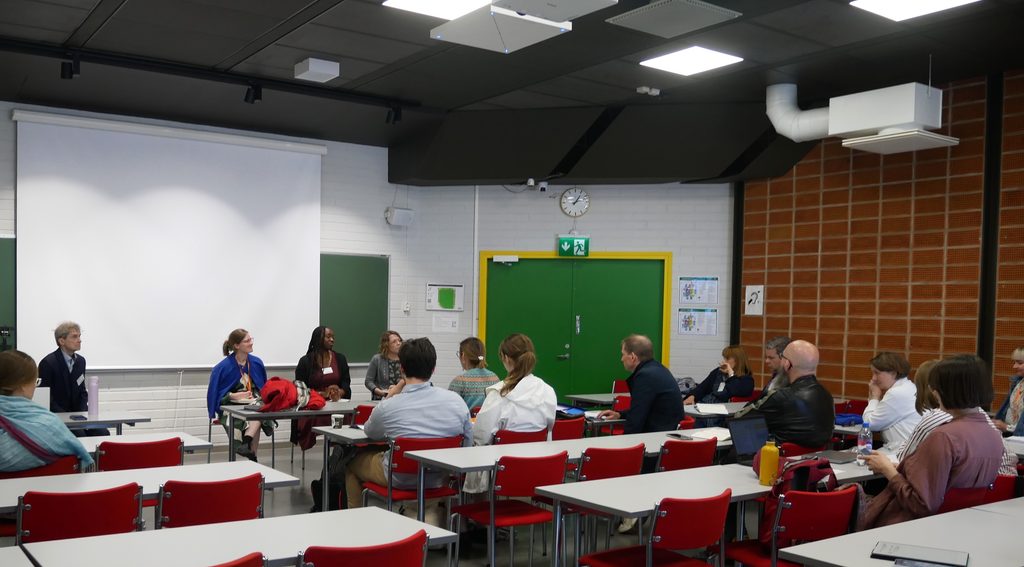
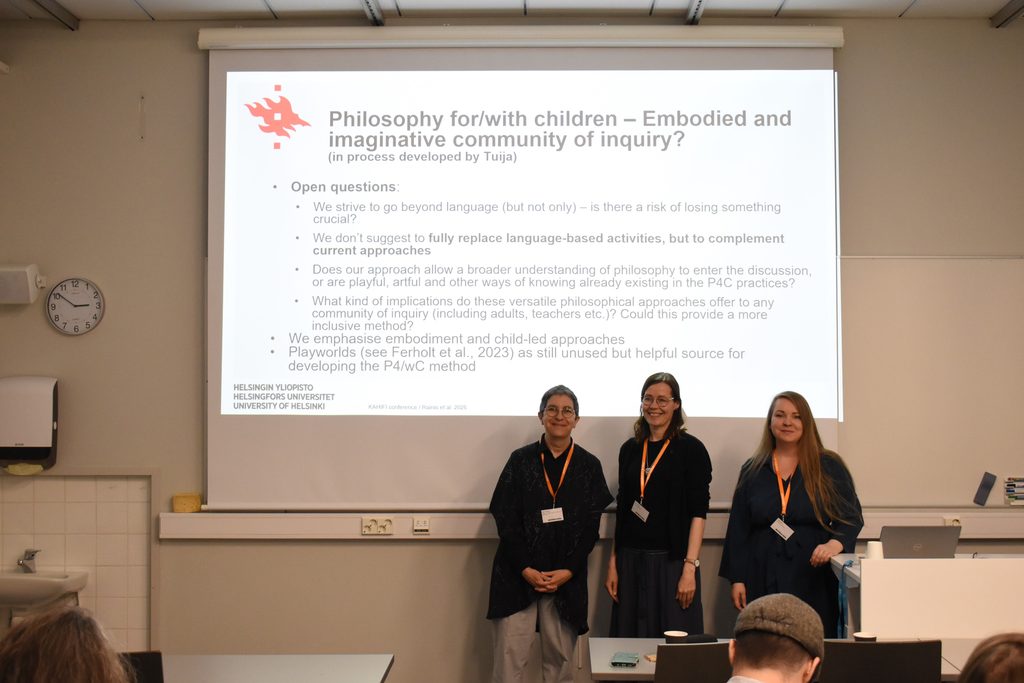
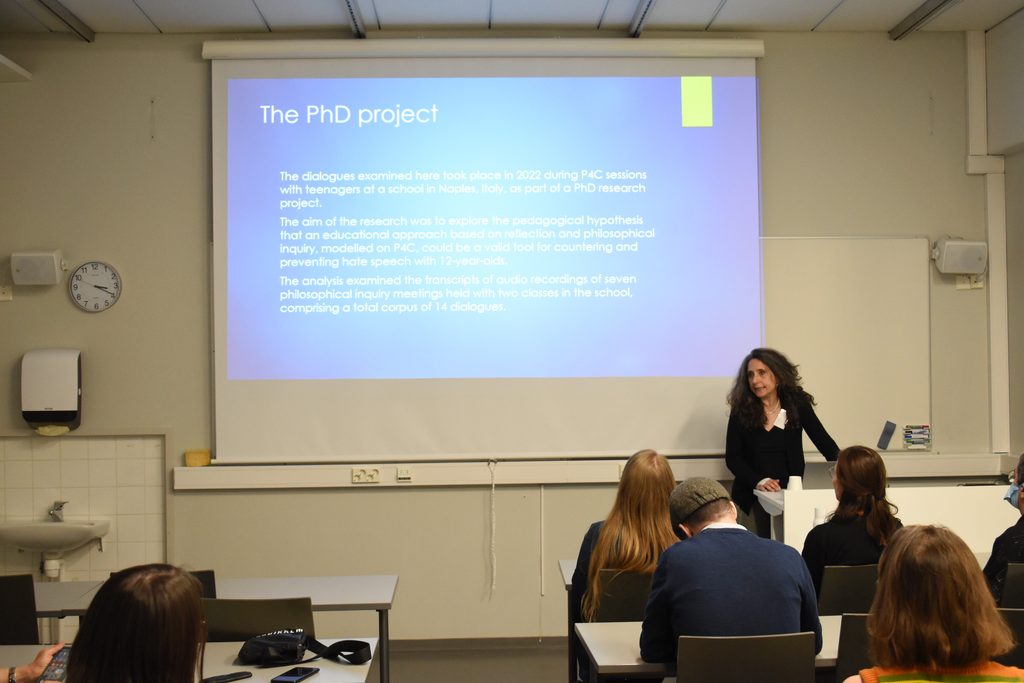
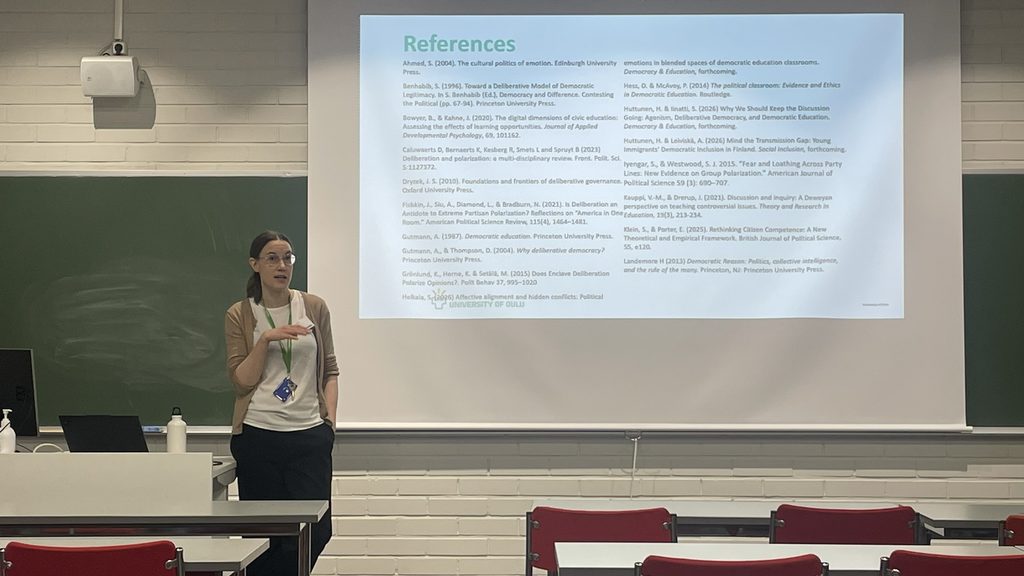
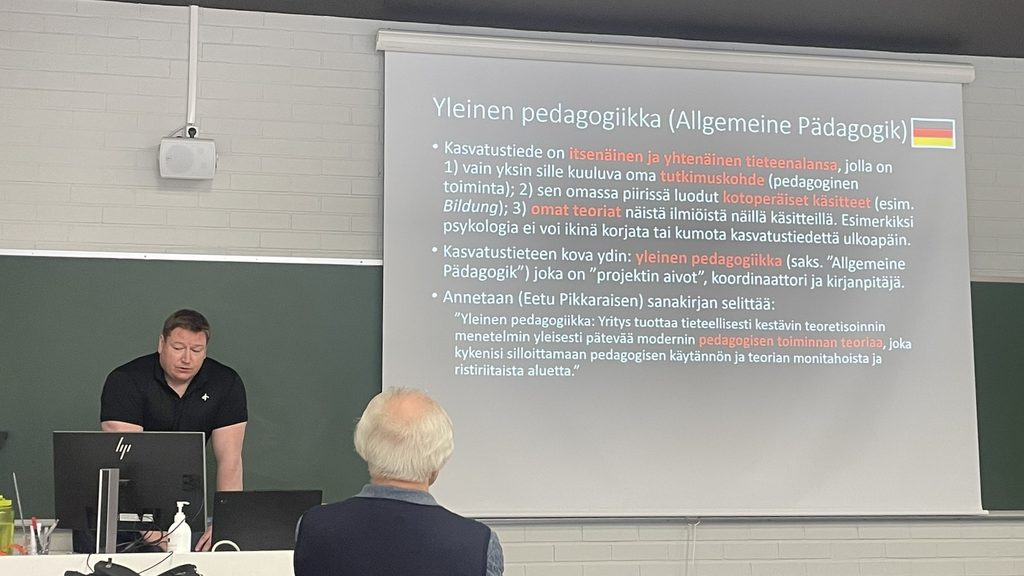
The DELIBERATE consortium organized the project’s main international conference Dialogue in Democratic Education in June of this year at the University of Oulu 10.6.–12.6. The event was co-organized in collaboration with the university’s educational philosophy research group DEMOED and the FutuPedaFilo research project (funded by the Kone Foundation). The conference also functioned as this year’s Finnish Summer Days for the History and Philosophy of Education (Kasvatuksen historian ja filosofian kesäpäivät), although only a few presentations were delivered in Finnish.
From the organizers’ perspective, the conference proceeded exceptionally well, and participants likewise appeared satisfied at its conclusion. The aim was to create a strongly focused academic event that would enable participants to meet others working on closely related topics. The number of participants – approximately 80 – proved well suited to this goal, as it in practice allowed everyone to connect with those researchers whose work they found relevant or interesting. Throughout the program, three to four parallel working group sessions were held across five time slots, and most sessions consisted of presentations that were thematically well aligned.
The invited international keynote speakers and panelists comprised a distinguished group of experts in democratic education, pragmatist philosophy of education, dialogic teaching, and philosophy with children and young people: Nicholas Burbules, Andrea English, Maughn Gregory, David L. Hildebrand, Walter Kohan, Jonas Lieberkind, and Dina Mendonça. (Introductions of keynote speakers on the conference webpage.)
On the pre-seminar day, Wednesday 10 June, the FutuPedaFilo project, led by Tuukka Tomperi, organized an event focused on philosophy with children and young people (P4/wC) and the community of philosophical inquiry pedagogy (CoPI). At the same time, Andrea English and David Hildebrand contributed presentations to the Demoed group’s research seminar at the university.
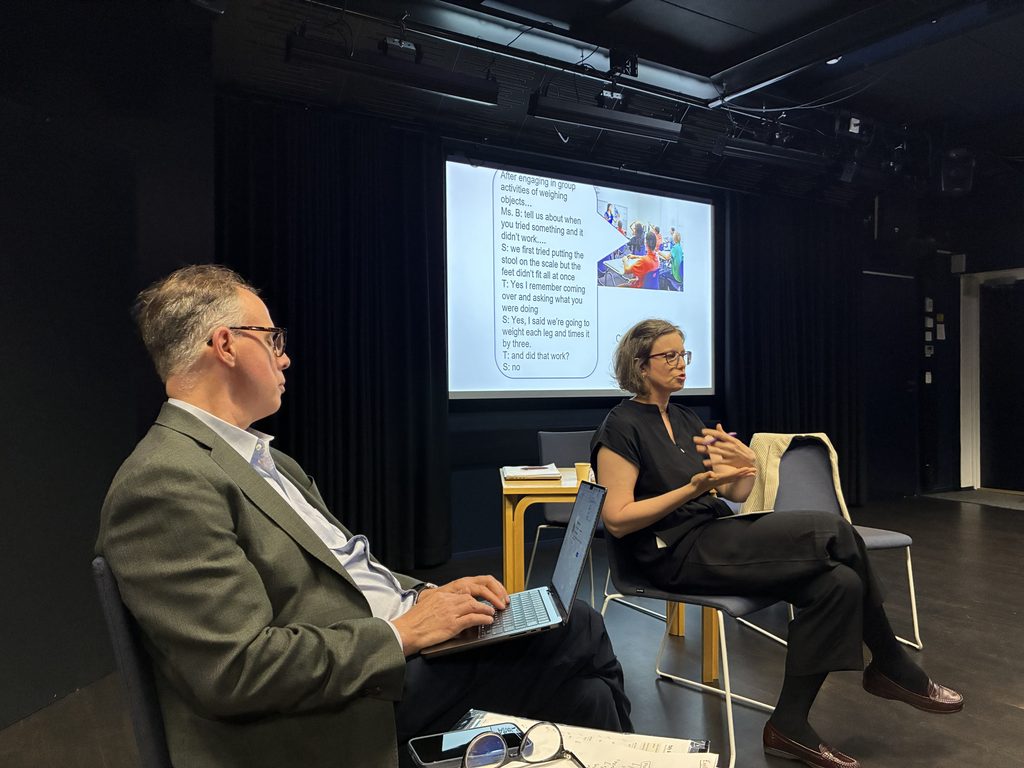
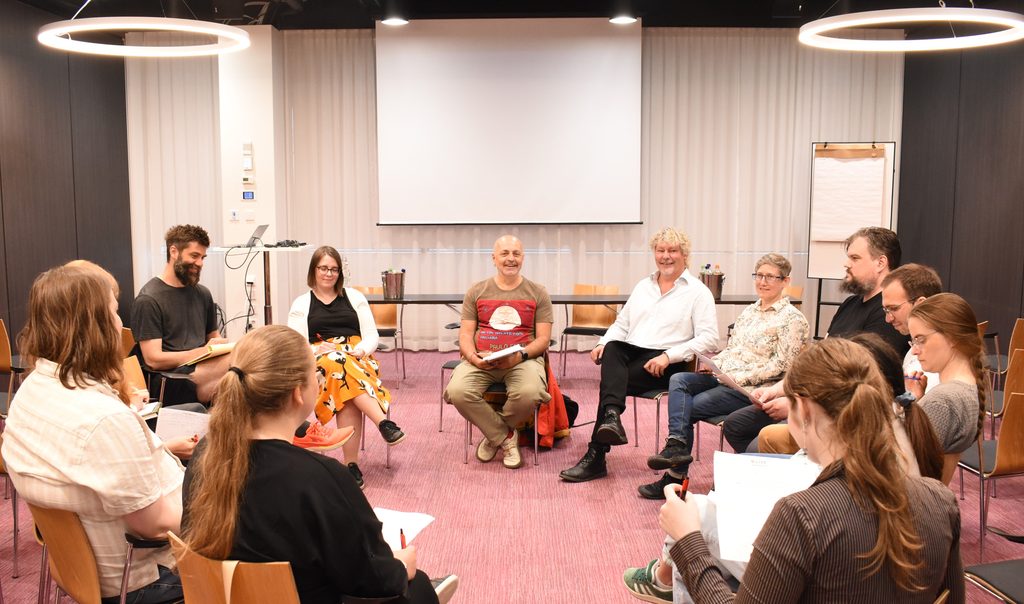
The philosophizing with children pre-seminar began with a presentation by professor Maughn Gregory (who is also the director of the Institute for the Advancement of Philosophy for Children, IAPC, founded by Matthew Lipman). He offered an introduction to the history of the field, followed by a panel discussion featuring Gregory, Kohan, and Mendonça, chaired by Tomperi. The audience consisted of approximately twenty conference participants, about half of whom were international and half from Finland. The second component of the pre-seminar was a workshop led by Walter Kohan on the theme of (childlike) “questioning”. Kohan provided an excellent demonstration of how a dialogical setting can be constructed through responsive engagement with participants. Through such spontaneous interaction, one of the emergent questions of the session became that of “beginning”. Participants were encouraged to pose successive questions, and one recurring inquiry was whether the workshop had already begun or was still about to begin – what “beginning” might actually mean. Perhaps, we should learn to begin anew again and again, just as we should learn to ask questions thoroughly without rushing to close them with answers.
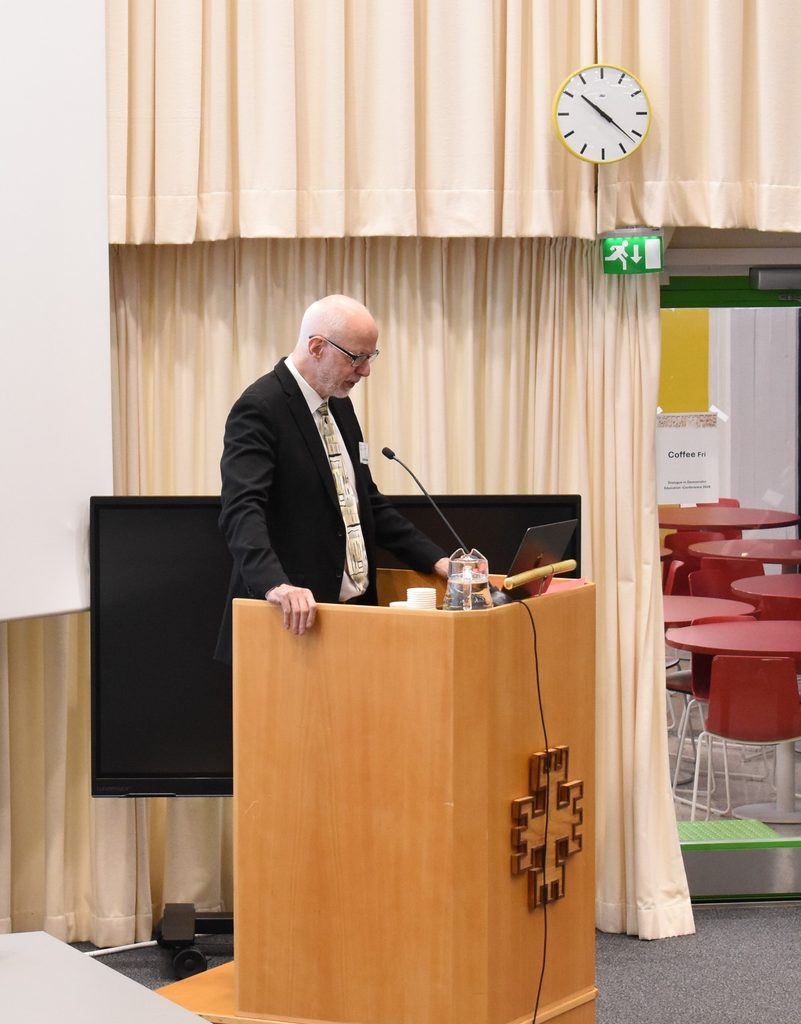
The keynote speakers on the first full conference day were Nicholas Burbules and Dina Mendonça. Emeritus Professor Nicholas Burbules from the University of Illinois Urbana-Champaign delivered the opening keynote lecture “Critical Dialogue and Communicative Virtues”. In his presentation, Professor Burbules addressed the erosion of civic dialogue in both public deliberation and more private, personal settings, asking what can be done to address this challenge. According to Burbules, a major challenge is that people increasingly inhabit different epistemic worlds, making it difficult to find common ground. While fast thinking, characterised by gut reactions, contribute to cognitive biases that hinder critical dialogue, slow thinking, careful analysis, and attentive listening are communicative virtues that help foster meaningful dialogue. Whereas educational practices have a central role in supporting the development of communicative virtues, Burbules highlighted that we also need to pay attention to the factors that impede their development.
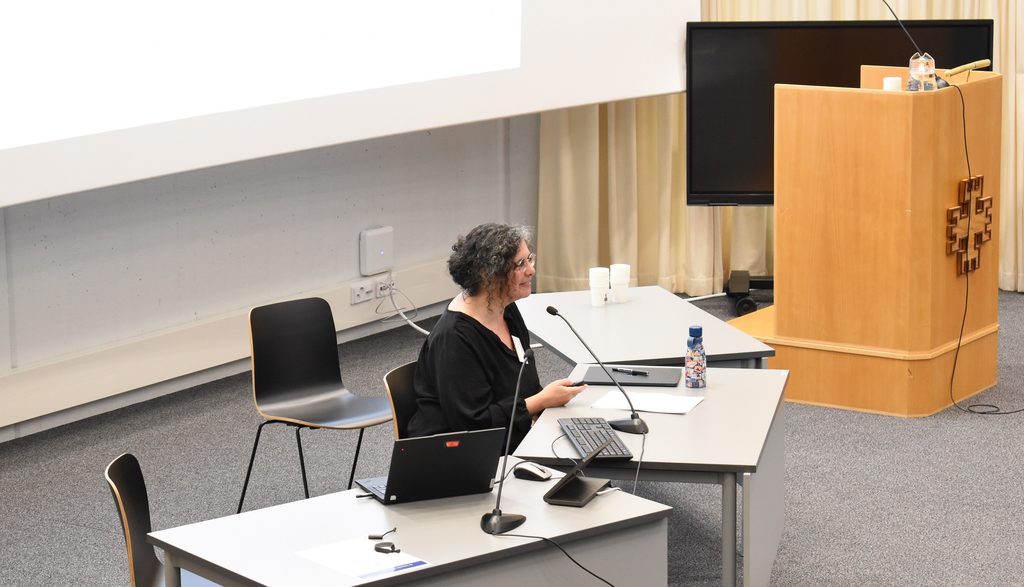
Dina Mendonça, an Assistant Professor at the IFILNOVA Institute of Philosophy at NOVA University Lisbon, presented the keynote “Education for Better Understanding Quality in Situations: Insights from a Layered Theory of Emotion for Decision Making”, drawing largely on her recent book A Deweyan Philosophical Take on Emotions. A Layered Theory (2024). Rather than assuming a horizontal landscape of emotions – as if different emotions existed on the same level – her approach conceptualizes emotional experience as layered, including so-called meta-emotions. This perspective, combined with a situational approach, opens up the possibility of understanding the reflective dimension of emotions. It also demonstrates how both the self and situations can be shaped and transformed not only through reason or intellect but also within the domain of emotion, an issue of considerable educational significance. In the pedagogical thinking of Matthew Lipman, founder of the Philosophy for Children (P4C) program, inspired by Deweyan philosophy, the notion of the layered qualitative structure of situations plays a central role particularly in his conception of “caring thinking”. Mendonça moved from questions in the philosophy of emotion and education toward educational practice by illustrating how layered emotional theory can be applied to the pedagogy of philosophical inquiry sessions (for example, philosophy with children). In collective reasoning and metalevel reflection, participants in such sessions can examine the perception and experience of situations in ways that generate new understandings and support holistic revisions of their perspectives.
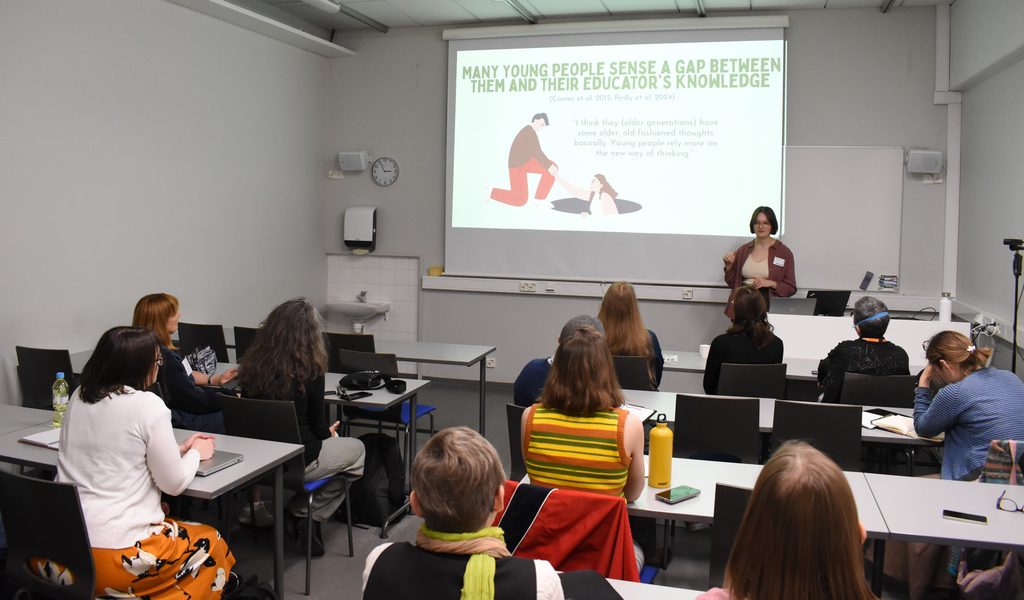
Following the keynote lectures, the afternoon consisted of three blocks of parallel sessions (29 presentations in total). The conference program and abstracts are available online on the conference webpage.
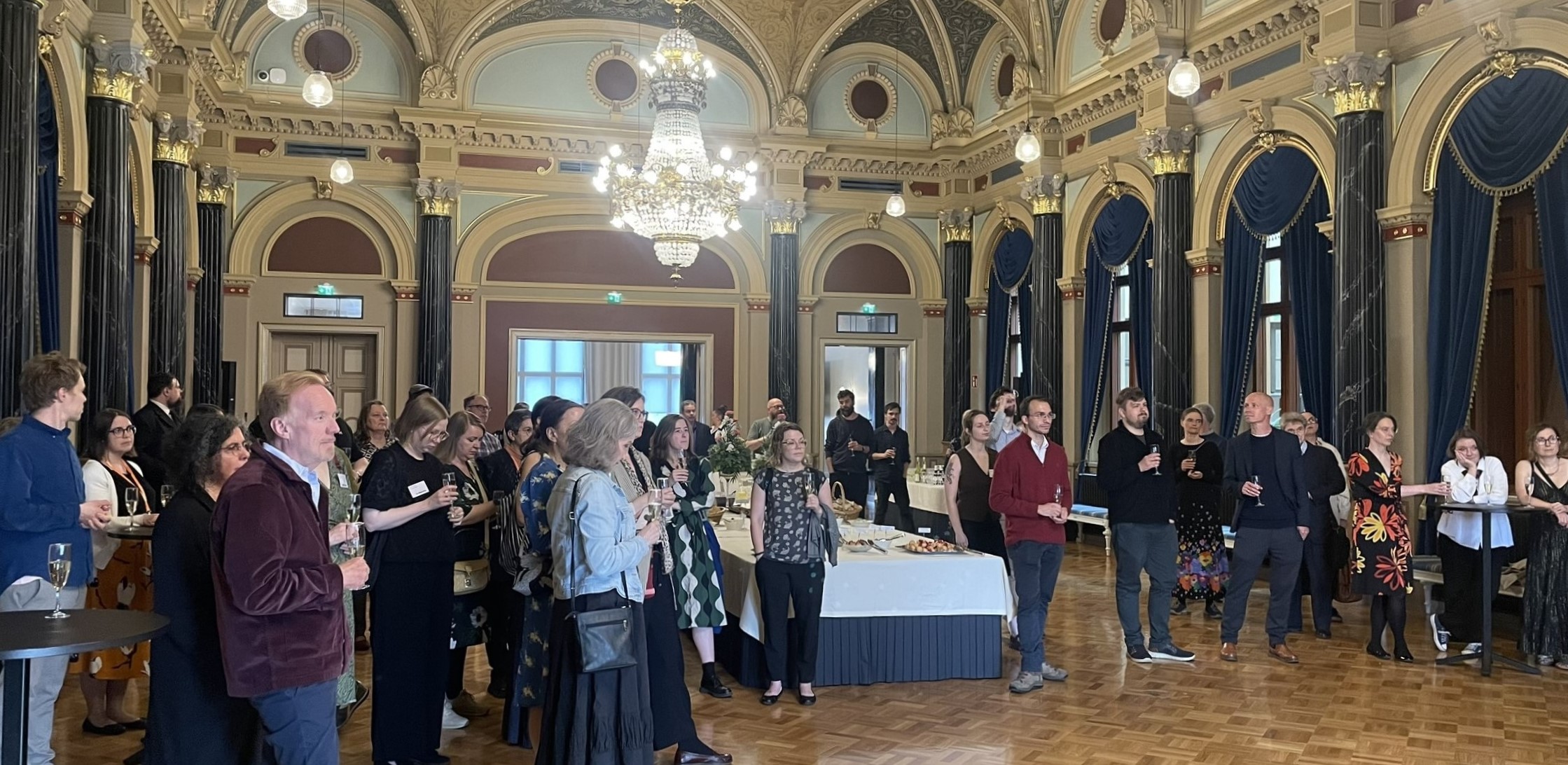
The City of Oulu hosted an evening reception in the stately and impressive Oulu City Hall.
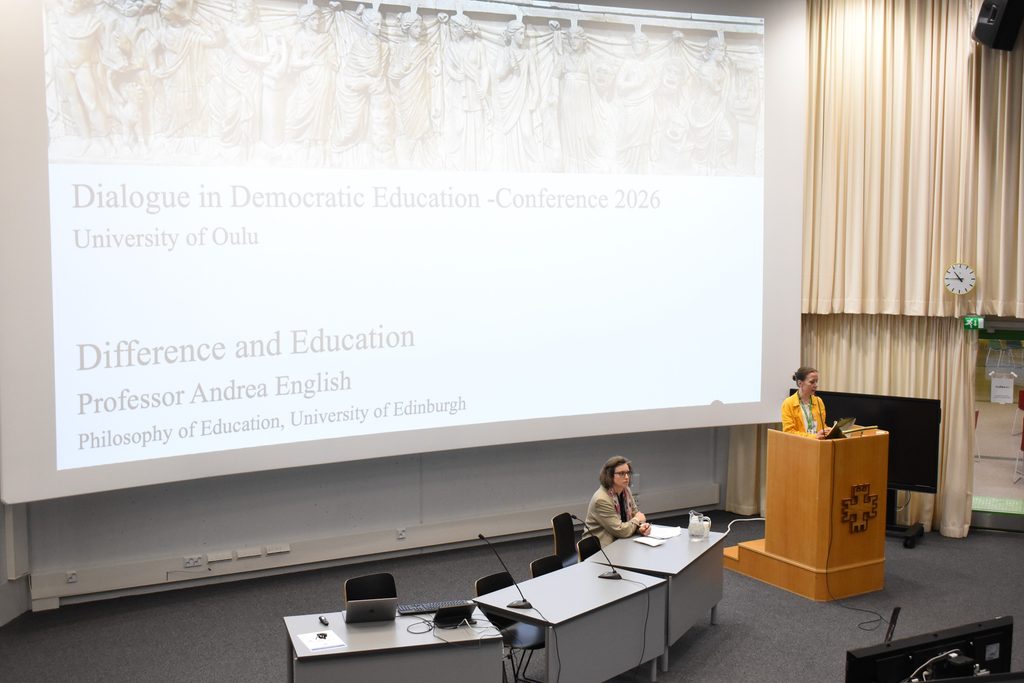
The Friday program included two rounds of parallel sessions, two keynote lectures, and a panel discussion. The keynote lecture “Difference and Education” by Andrea English, Professor of Philosophy of Education at the University of Edinburgh highlighted three interconnected dimensions of educational meaning of difference: 1) individual, 2) the environment of learning, and 3) the intergenerational-pedagogical relationship. The first dimension highlights the uniqueness and educability of each learner. In this case, the difference arises from different epistemic resources and backgrounds of the students. The second, environment dimension pays attention to novel features of the environment that put the learner on unsure footing. It is connected to the German idea of Bildung and the role of “a world resist us” in the reflective experience and learning. Finally, the intergenerational difference -dimension asks us to view also teacher as a learner: The teacher is learning how the child is learning. English’s “educative difference approach” can be considered as a representative of ‘non-affirmative democratic education’ which stands opposite to traditional educational views in which learners affirm the existing order of society.
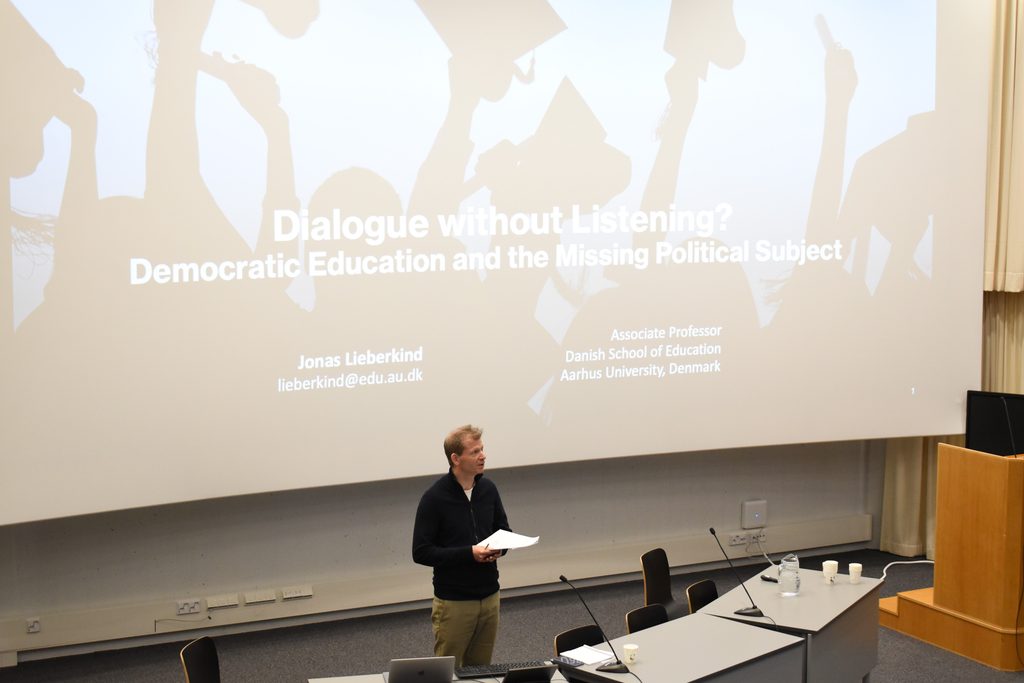
The keynote by Jonas Lieberkind was “Dialogue without Listening? Democratic Education and the Missing Political Subject.” Jonas Lieberkind is Associate Professor of Educational Sociology at Aarhus University, Denmark. He has done research on politics and citizenship education and young peoples’ attitudes to society and political engagement, including their political socialization and political identity. In the keynote Lieberkind discussed premises of education for democratic citizenship with attention to the question of classroom climate and school operational culture that support students’ participation in school. As a member of the team conducting the International Civic and Citizenship Education Study ICCS in Denmark, he presented data from the recent ICCS 2022. The data show the Danish Grade 8 students do not see they have much to say in decision-making in school, and they experience less than before that school encourages democratic dialogue. This gives cause to concern because an open classroom climate encourages dialogue and supports students’ democratic citizenship. Also institutional forms for students’ participation in decision-making in school need to be strengthened to support the growth of students’ political subjectivity.
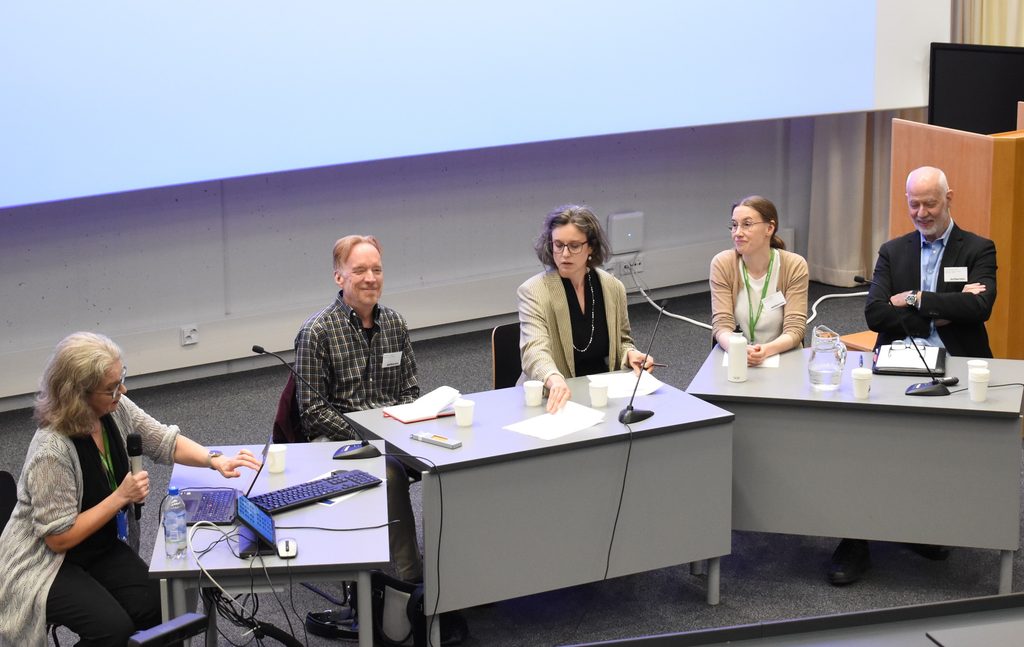
The panel discussion featured Nicholas Burbules, Andrea English, Maughn Gregory, and Anniina Leiviskä, and was chaired by Katariina Holma. The discussion addressed the possibilities and challenges of deliberative education in contemporary educational contexts. Participants considered what research indicates about the conditions required for deliberation and the challenges posed by current educational structures, institutional contexts, and broader societal developments. They also reflected on the realistic potential of teaching and schooling to resist anti-democratic trends and to promote democratic societies. The discussion further extended to questions concerning the moral and political responsibilities of teachers, educators, and researchers beyond the school context – that is, in their roles as societal actors.
In addition to the keynotes and panel, Friday consisted of two blocks of parallel sessions (22 presentations in total). As can be seen from the presentation titles and abstracts in the conference program, the event engaged extensively and diversely with different forms and possibilities of dialogic and deliberative democratic education. At the same time, it maintained a clear thematic focus, enabling participants to identify shared interests and engage in discussions directly relevant to their own research. In this respect, the conference proved highly successful as a networking platform. The participants’ backgrounds and orientations were particularly concentrated in four areas: pragmatist philosophy of education, research on dialogic teaching, the pedagogy of philosophizing with children and young people, and democratic education more broadly. These areas also reflect the networks through which information about the conference and the call for proposals had originally circulated.
From our perspective as the organizers – the members of the DELIBERATE consortium – the conference was a clear success. It provided an up-to-date overview of internationally relevant research in the field of our project and enabled the establishment of several new collaborative relationships, which will undoubtedly prove valuable not only for the project itself but also for advancing these areas of research well into the future.